
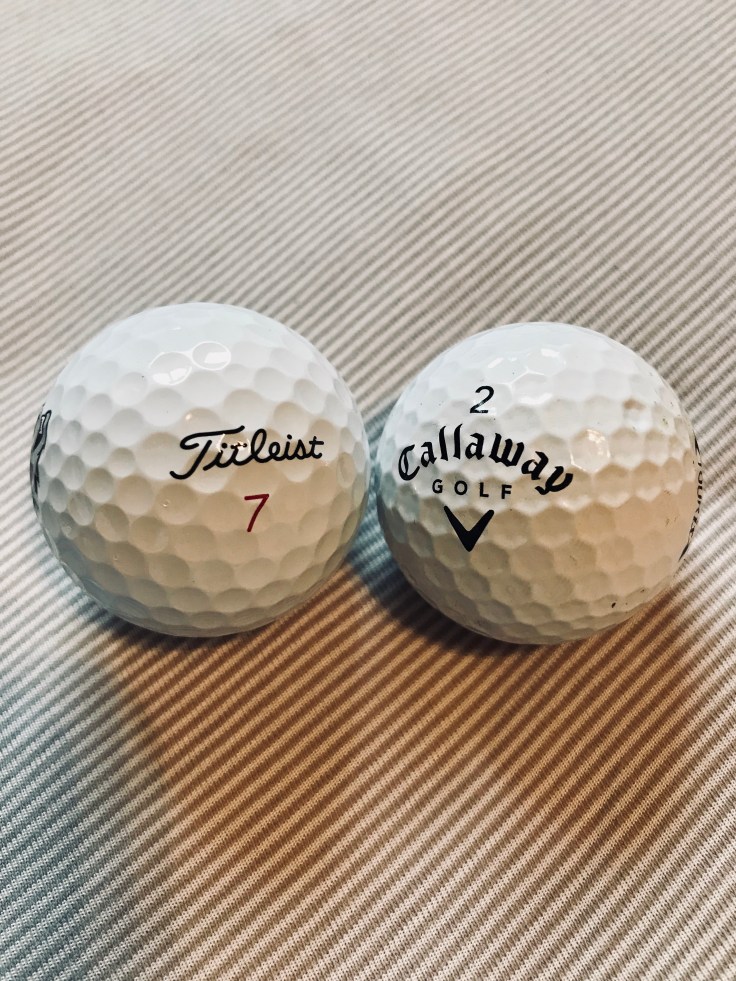
 Callaway, TaylorMade, Titleist… there are so many brands of golf balls! And then even inside those brands, there are super small differences in compression and forgiveness. What the heck is the difference between a Callaway SuperSoft and Callaway ChromeSoft anyway? With so much information, it’s hard to know where to soft. Hopefully the following tips help you find the perfect golf ball for your game!
- If you’re a beginner, chances are when you step onto the course your first couple of times, you’re going to be losing quite a few golf balls. Until you start to break 90, stick with golf balls that won’t break the bank. TopFlite, Srixon and Noodles are some smaller brands that tend to have better deals.
- If you’re not a beginner and you’re serious about your game, go ahead and invest in some nicer golf balls. My favorite are the Callaway ChromeSofts and TaylorMade TP5s. It’s worth it!
- Now here’s the big question: Should you get a hard ball or a softer ball? Firmer golf balls will get more compression off of the club face for you with high swing speeds. These will go a little farther and have a little less forgiveness. Softer golf balls will not have much compression, but will be more forgiving and may have a better feel around the green. If you do not have a crazy high swing speed, forget the compression factor and pick the ball that performs well around the green. The ball that stops quickest for you on the green should be the winner.
- Once your golf balls start to get scuffs from hitting trees or cart paths, switch it out for a new one. This doesn’t mean throw it away, it can still be used for chipping practice! Having tears or scuffs in the outer coating of the golf ball and hurt your distance off the tee.
At the end of the day, golf ball preference is all up to you. These are just some subtle differences that I hope will improve your feel with a little extra distance off the tee. But hey, no matter what ball you play, they all roll into the cup just the same.
 Golf Like a Girl
Leave a comment